Best Embroidery Machines for a Home Business (2026)
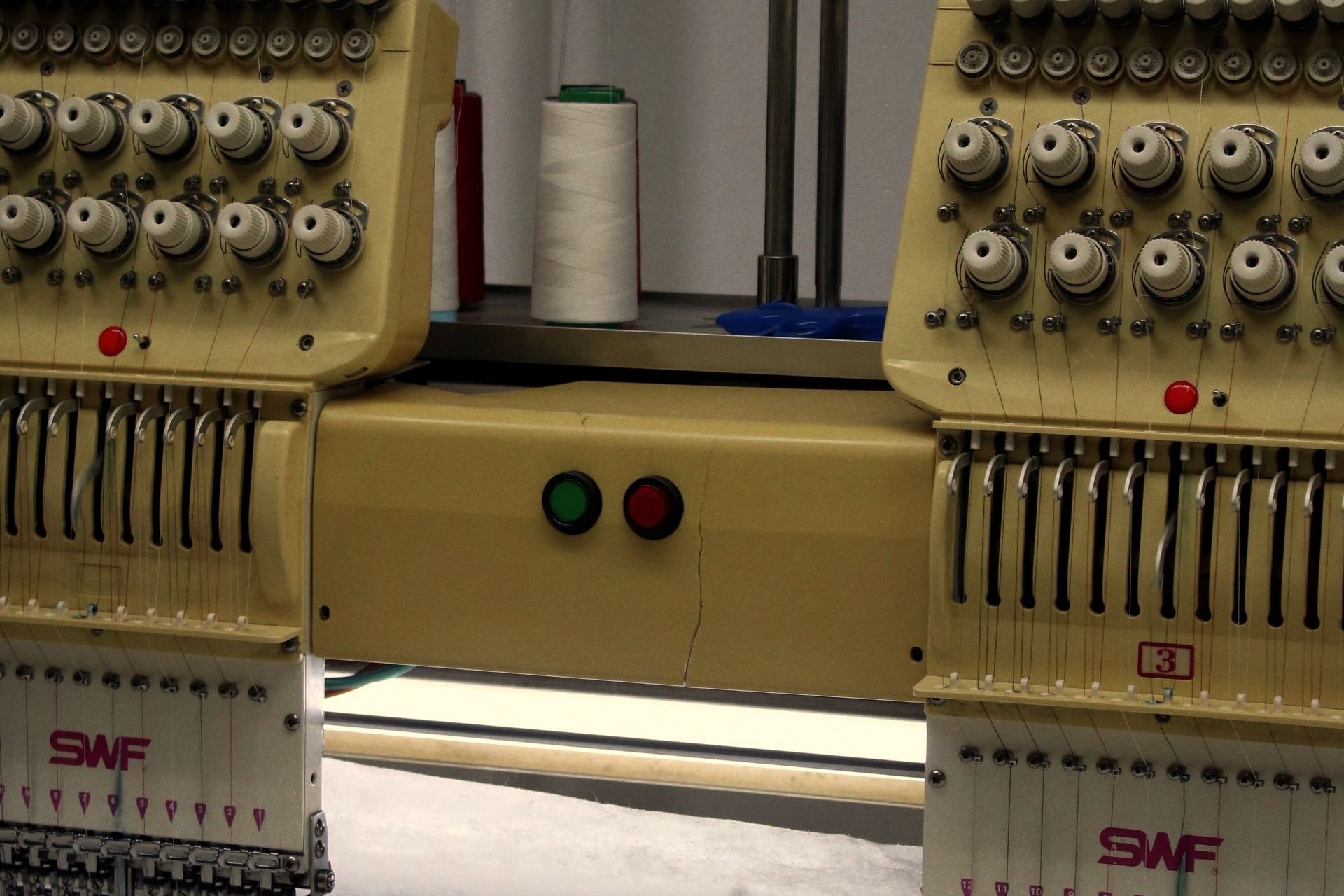
Embroidery is one of the few craft businesses where a single machine can pay for itself in a few dozen orders: names on towels, logos on caps and polos, monogrammed baby gifts, and custom patches all carry a premium because the customer cannot make them at home. But the machine you start with decides what you can sell. Buy a 4"x4" hoop and you are limited to small chest logos and baby items. Buy for the work you actually want — jacket backs, tote bags, and large shirt designs — and hoop size, stitch speed, and how the machine handles thread-color changes matter more than the number of built-in designs.
What matters for a home business: maximum embroidery field (this is the hard ceiling on every design you can take), stitch speed in stitches per minute (this is your hourly output), jump-stitch trimming and color sorting (these cut the manual work between colors), and how designs get into the machine — wireless transfer and USB are the two practical routes. Every machine below is single-needle, which is the honest starting point for a home business: you change thread colors by hand, and you step up to multi-needle only when order volume proves it. The six below run from a low-risk starter to machines that can anchor a real shop.
The short answer
- Cheapest way to test the business: Brother PE545 (~$430) — embroidery-only, 4"x4" field, 135 designs, wireless transfer. Learn the craft and take small orders first. Check price on Amazon →
- Best combo starter: Brother SE700 (~$540) — sewing plus embroidery in one machine, 135 designs and 103 sewing stitches, if you also need to sew the products you embroider. Check price on Amazon →
- Best value business pick: Brother PE900 (~$1,100) — 5"x7" field, 193 designs, jump-stitch trimming and color sorting. The smallest field that covers most paid work. Check price on Amazon →
- Largest field for the money: POOLIN EOC06 (~$1,200) — up to 7.9"x11", 7-inch touchscreen, multiple hoops and a starter kit of thread, stabilizer, and bobbins in the box. Check price on Amazon →
- Best large-field specialist: Janome Memory Craft 500E (~$2,099) — 7.9"x11", 160 designs, four hoops and an extra-wide table included. Check price on Amazon →
- Best Brother step-up: Brother NQ1700E (~$2,400) — 6"x10" field, 258 designs, 850 stitches per minute, and a larger 4.85-inch touchscreen. Check price on Amazon →
Brother PE545 — the cheapest way to test the business
The PE545 is an embroidery-only machine with a 4"x4" field, 135 built-in designs, 10 lettering fonts, wireless LAN transfer, USB, and a 3.7-inch color touchscreen. That field is small — think left-chest logos, patches, baby onesies, pet collars, and monograms — but those are exactly the low-material-cost items many new shops learn on. At around $430 it is the lowest-risk way to find out whether customers will pay you to embroider before you commit four figures. Treat it as a learning and sampling machine, not your forever production machine.
Honest pros:
- ~$430 — the lowest entry price on this list
- Wireless transfer plus the Artspira app — no cable-and-USB shuffle for every design
- 135 designs and 10 fonts — enough to take real, small orders on day one
- Embroidery-only means a simpler machine with less to learn
Honest cons:
- 4"x4" field rules out most shirt-front, tote, and jacket work
- No sewing function — you need a separate machine to make or finish products
- Single-needle color changes are manual, so multi-color logos are slow
Brother SE700 — sewing and embroidery in one starter
The SE700 pairs the same 4"x4" embroidery field and 135 designs as the PE545 with a full sewing side: 103 built-in sewing stitches, 10 styles of one-step buttonhole, 8 included feet, an automatic needle threader, and a jam-resistant drop-in bobbin. Wireless transfer and the 3.7-inch touchscreen carry over. At around $540, it makes sense if your product plan is "sew it, then embroider it" — pouches, aprons, and simple garments — and you do not own a good sewing machine yet. If you already sew, the PE545 or PE900 is the smarter embroidery spend.
Honest pros:
- Sewing plus embroidery in one footprint — good for small workspaces
- 103 sewing stitches and 8 feet included — a capable sewing machine, not a token add-on
- Automatic needle threader and drop-in bobbin keep setup fast
- Wireless design transfer, same as its embroidery-only sibling
Honest cons:
- Same 4"x4" ceiling — the sewing side does not fix the hoop limit
- Switching between sewing and embroidery setups costs time on mixed orders
- Not a production machine — it is a starter that a busy shop will outgrow
Brother PE900 — the value business pick
The PE900 is where this list turns from hobby to business. The 5"x7" field covers most paid work — shirt fronts, tote bags, larger monograms, and most logo placements — and it adds the two features that save real labor on every job: automatic jump-stitch trimming, so you are not hand-snipping thread jumps, and color sorting, which reduces unnecessary color changes. You get 193 built-in designs, 13 fonts, wireless transfer, USB, and a 3.7-inch touchscreen at around $1,100. For most home businesses starting on Etsy, custom orders, or local team and workwear, this is the sensible first serious machine.
Honest pros:
- 5"x7" field — the practical minimum for a general custom-order menu
- Jump-stitch trimming and color sorting cut hands-on time per piece
- 193 designs and 13 fonts — the deepest Brother library at this tier
- Wireless plus USB — both transfer routes covered
Honest cons:
- ~$1,100 is real money before thread, stabilizer, blanks, and digitizing costs
- Still single-needle — a 6-color logo still means 5 manual thread changes
- Jacket backs and large designs still need a bigger field than 5"x7"
POOLIN EOC06 — the largest field for the money
The EOC06 is the value outlier: a maximum embroidery area of 7.9"x11" — the joint-largest on this list — for around $1,200. It ships with multiple hoops including the large size, a 7-inch color touchscreen, 156 built-in designs, and 8 fonts, and the box includes starter thread, stabilizer, and pre-wound bobbins so you can run your first jobs without a second order. Custom designs go in by USB in DST or DSB format, which means you need digitizing software or a digitizing service for customer logos — budget for that whichever large-field machine you choose. The trade-off is brand depth: POOLIN's dealer and tutorial ecosystem is smaller than Brother's or Janome's, and the company points buyers to its user group and video channel for one-to-one support.
Honest pros:
- 7.9"x11" maximum field at a ~$1,200 price — unmatched size per dollar here
- Multiple hoops plus thread, stabilizer, and bobbins included to start
- 7-inch touchscreen — the biggest screen on this list, easier design editing
- 156 designs and 8 fonts built in
Honest cons:
- Smaller brand, dealer, and repair network than Brother or Janome
- USB-only custom transfer in DST/DSB — no wireless route
- Support leans on online groups and videos rather than local dealers
Janome Memory Craft 500E — the large-field specialist
The 500E is an embroidery-only Janome with a 7.9"x11" maximum field, 160 built-in designs, 6 monogramming fonts, and an embroidery speed range of 400–860 stitches per minute. It includes four hoops and an extra-wide table, which matters more than it sounds: large hoops on heavy fabric need support or stitch quality suffers. On-screen editing covers resizing, rotating, combining, and arc text, designs arrive by USB in Janome's .jef format, and features like auto return after a thread break protect long, expensive runs. At around $2,099 you are paying for Janome build quality and that large field in a dedicated machine — a production choice, not a starter.
Honest pros:
- 7.9"x11" field with four hoops and an extra-wide table included
- Up to 860 spm — joint-fastest on this list
- Auto return after thread break and programmable jump trimming protect long runs
- Janome build and dealer reputation at the specialist tier
Honest cons:
- ~$2,099 — double the PE900 for field size and build, not double the designs
- USB transfer and .jef format — plan your file workflow around Janome
- Embroidery-only and large — it claims a permanent workstation
Brother NQ1700E — the Brother step-up
The NQ1700E sits between the PE900 and true commercial gear: a 6"x10" field, 258 built-in designs, 13 fonts, up to 850 stitches per minute, wireless transfer, and a 4.85-inch color touchscreen — noticeably easier to edit on than the 3.7-inch screens below it. Both a 6"x10" and a 5"x7" hoop are included, and retailer bundles commonly add Brother's BES Blue embroidery software. At around $2,400 it is the pick for a Brother shop that has outgrown 5"x7", wants faster throughput and a bigger workspace, but is not ready to jump to a multi-needle commercial machine and its very different price.
Honest pros:
- 6"x10" field and 850 spm — more work per hour than the PE900
- 258 designs — the largest built-in library on this list
- 4.85-inch touchscreen and 8.3-inch needle-to-arm workspace
- Wireless transfer, with both large and mid-size hoops included
Honest cons:
- ~$2,400 — close to entry multi-needle money; compare carefully before buying
- Still single-needle — color changes remain your labor on every design
- Field is wide but not the 7.9"x11" the EOC06 and 500E offer for less
Side-by-side
| Brother PE545 | Brother SE700 | Brother PE900 | POOLIN EOC06 | Janome 500E | Brother NQ1700E | |
|---|---|---|---|---|---|---|
| Typical price | ~$430 | ~$540 | ~$1,100 | ~$1,200 | ~$2,099 | ~$2,400 |
| Max embroidery field | 4"x4" | 4"x4" | 5"x7" | 7.9"x11" | 7.9"x11" | 6"x10" |
| Built-in designs | 135 | 135 | 193 | 156 | 160 | 258 |
| Also sews | No | Yes, 103 stitches | No | No | No | No |
| Design transfer | Wireless, USB | Wireless, USB | Wireless, USB | USB (DST/DSB) | USB (.jef) | Wireless, USB |
| Best for | Testing the idea | Sew + embroider starter | Most home businesses | Big field, tight budget | Large-field specialist | Growing Brother shop |
How to choose
Buy the hoop, not the design count. Built-in designs are a starter library — real businesses live on custom files. The maximum field is permanent: a 4"x4" machine will never stitch a jacket back, no matter how many designs it ships with. List the products you want to sell first, note the largest design each one needs, and buy the smallest machine whose field covers that list with room to spare.
Budget the whole workstation, not just the machine. Thread, stabilizer (cut-away, tear-away, and wash-away), spare needles and bobbins, blanks, and digitizing — software or a per-design service for customer logos — routinely add several hundred dollars before your first paid order. The EOC06's included starter supplies help, but no machine here removes that line item.
Single-needle now, multi-needle when the orders prove it. Every machine here stops for manual thread changes. That is fine for names, monograms, and 1–3 color logos. When you are regularly turning away multi-color team orders because color changes eat your day, that is the evidence — not a guess — that a multi-needle machine will pay.
Complete the seller setup. Once products are stitched, they still need cutting, finishing, and photographing: our sewing machines for beginners guide covers the sewing side, our cutting machine guide covers appliqué and fabric cutting, and our product photography lighting guide makes finished work look professional in listings.
FAQ
What hoop size do I actually need to sell embroidery?
5"x7" is the practical floor for a general menu — shirt fronts, totes, and most logos. 4"x4" limits you to small placements like chest logos, patches, and baby items, which can still be a viable narrow shop. If jacket backs, large tote designs, or big shirt graphics are the plan, you need the 7.9"x11" class from the start.
Can I embroider a customer's logo with just the machine?
The machine stitches a design file — it does not turn artwork into that file. Converting a logo is called digitizing, and it needs digitizing software or a paid digitizing service, in the format your machine reads (PES for Brother, .jef for Janome, DST/DSB for the POOLIN). Price that into every custom quote.
How long does one item take to stitch?
It depends on stitch count, not item size alone. A small name might run in a few minutes; a dense 20,000-stitch logo at 650–850 stitches per minute is roughly 25–30 minutes of machine time, plus hooping, stabilizer, and thread changes. Quote delivery times from stitch counts, not hope.
Do I need a commercial machine to start?
No. Commercial multi-needle machines are faster on multi-color work and built for all-day volume, but they cost several times more. Most home businesses start profitably on a single-needle machine, learn which products actually sell, and upgrade with order history — not predictions — behind the decision.