
Best Jewelry Making Tools for Beginners (2026)
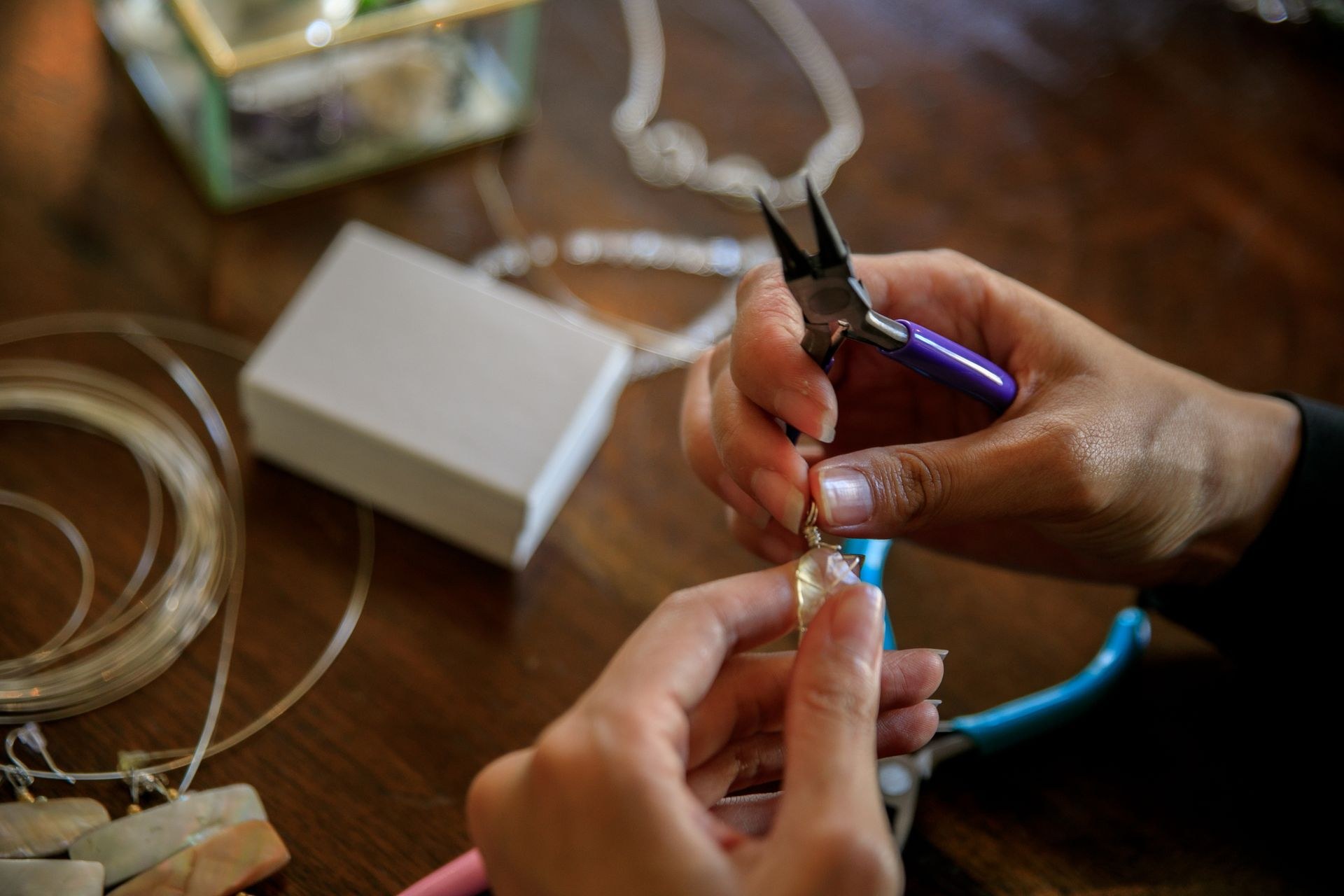
You do not need twenty tools to make your first necklace, bracelet, or pair of earrings. You need three pliers that do three different jobs, a cutter that leaves a clean end, and enough findings — jump rings, clasps, crimp beads, head pins, earring hooks — to actually finish a piece. Almost every beginner mistake in jewelry making traces back to the wrong tool for one of those jobs: household pliers with teeth that scar the wire, scissors that crush beading wire instead of cutting it, or two hands trying to open a jump ring that really wants two pairs of pliers.
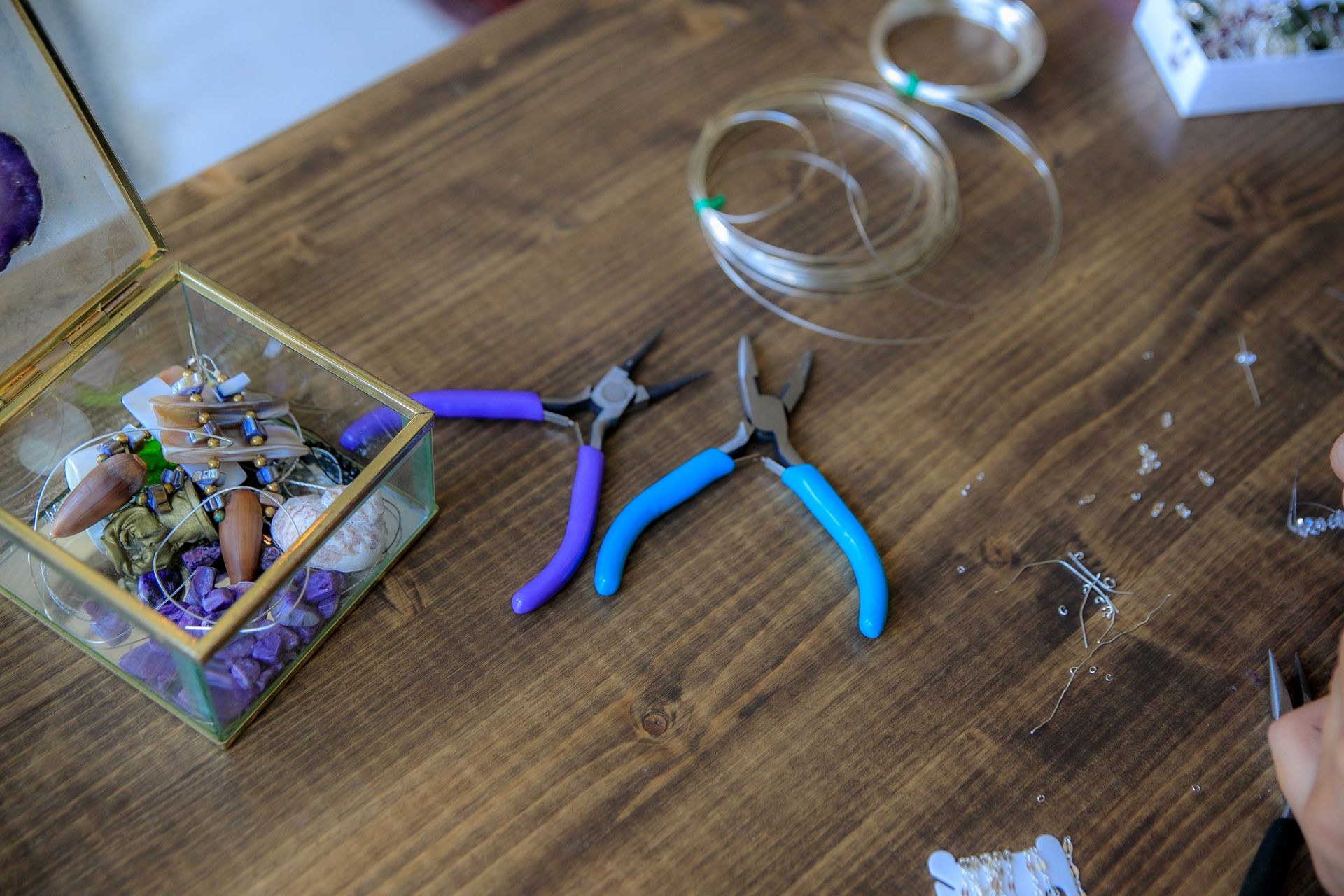
What actually matters: chain nose pliers first (smooth, flat inner jaws for gripping, bending, opening and closing jump rings, and flattening crimps — the workhorse), round nose pliers second (smooth tapered round jaws that form the loops every earring drop and pendant bail starts with), and a side or flush cutter third (rated for thin jewelry wire, typically up to about 1 mm — never for hard steel or memory wire, which will notch the blades). After that, the honest differences between kits are jaw finish (smooth jaws should not mark soft wire), the joint and spring (a box joint and a double-leaf spring stay aligned and tire your hand less), and whether the kit includes the findings and wire to make something on day one or just the tools. The six below cover every sensible starting point, from a complete tools-plus-findings kit to a small quality pliers set you will still be using years later.
The short answer
- Best overall: PAXCOO Jewelry Making Supplies Kit with Tools, Wires and Findings — 3 pliers plus beading wire, elastic cord, and 845 findings in 12 styles in a zip pouch, so you can finish real pieces the day it arrives. Check price on Amazon →
- Best budget tools-only set: Shynek 3pcs Jewelry Making Plier Tools — chain nose, round nose, and a side cutter in color-coded handles, rated for wire up to 1 mm. All basics, nothing extra. Check price on Amazon →
- Best quality upgrade: The Beadsmith Ergonomic Pliers Set, 4 pieces — extra-fine tips, box-joint construction and double-leaf springs, with round, chain and flat nose pliers plus a semi-flush cutter in a leatherette case. Check price on Amazon →
- Best with a crimper: Acejoz Jewelry Making Tools Kit, 6 pieces — the core three plus bent nose pliers, dedicated crimping pliers, and end nippers, for cleaner strung necklaces and bracelets. Check price on Amazon →
- Best branded starter: WORKPRO Jewelry Pliers Set, 3 pack — drop-forged carbon steel with a nickel-plated finish and ergonomic non-slip handles, from a general tool brand with a real track record. Check price on Amazon →
- Best expanded set: The Beadsmith Fashion Color Pliers, set of 8 — adds bent chain nose, nylon jaw, knotting tweezers and split-ring tweezers to the core tools, in a matching clutch. Check price on Amazon →
PAXCOO Jewelry Making Supplies Kit — the best overall
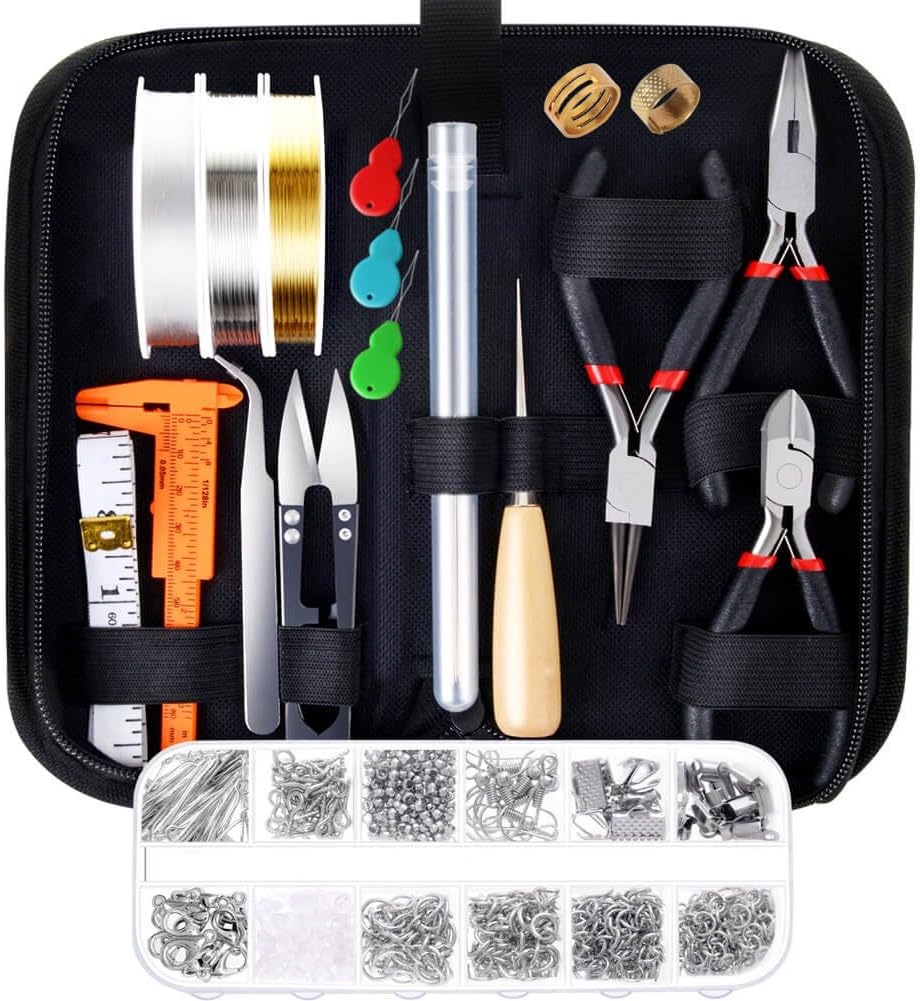
Start here if you own nothing yet. The PAXCOO kit is the one pick that is a workshop in a pouch: three essential pliers (round nose, flush cutter, and chain nose), three rolls of stringing material (0.4 mm silver beading wire, 0.4 mm gold beading wire, and 1.0 mm clear elastic cord), and a findings box with 845 pieces in 12 styles — jump rings in four sizes, lobster clasps, eye pins, screw eye pins, crimp beads, earring hooks, ribbon ends, cord ends, and rubber earring backs. Tweezers, a caliper, an awl, a jump ring opener, a thimble ring, thread scissors, a tape measure, three needle threaders, and six beading needles round it out, all in a black zip pouch. That completeness is the real feature: a beginner can open it and finish a bracelet, a strung necklace, and a pair of drop earrings without a second order, and finishing pieces is what teaches the skills.
Honest pros:
- Tools, wire, and 845 findings in one purchase — nothing else needed for first projects
- The three pliers every beginner actually needs: round nose, chain nose, and a flush cutter
- Findings in the sizes beginners use most, sorted in their own box
- Zip pouch keeps a small, losable toolkit together
Honest cons:
- The pliers are starter grade — sellers who end up making daily will eventually upgrade this one part
- Findings are fashion-metal craft findings, not sterling or gold-filled — price and label finished pieces accordingly
- Silver-tone only in the findings box — gold-tone projects need a second findings purchase
Shynek 3pcs Jewelry Making Plier Tools — the best budget tools-only set
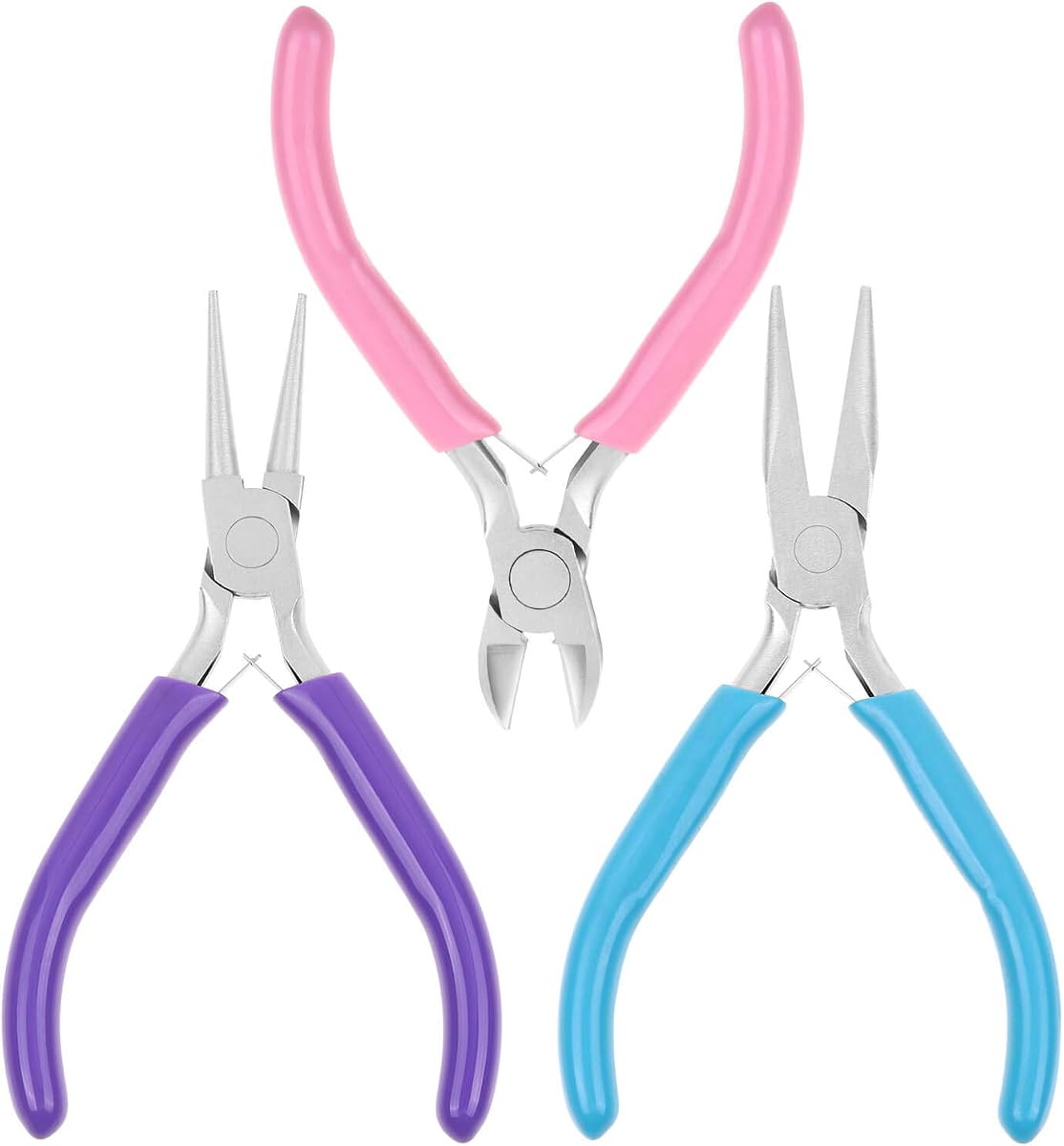
The Shynek set strips the idea down to its minimum: a 5-inch chain nose plier with a blue handle, a 5-inch round nose plier with a purple handle, and a 4.5-inch side cutter with a pink handle, all in alloy steel with rubber grips. The color coding sounds like a gimmick until you are mid-project — you learn to grab purple for loops and blue for gripping without looking, which is exactly how experienced makers work with their own sets. The chain nose jaws are smooth and toothless, as jewelry pliers must be, and the cutter is specified for thin metal wire up to 1 mm and flexible stringing wire. Buy this when you already have beads and findings, or want to add proper tools to a bead stash without paying for a second box of findings you do not need.
Honest pros:
- Exactly the core three tools, color-coded so each job gets its own plier
- Smooth, toothless jaws — made for jewelry wire, not borrowed from a toolbox
- Cutter specified to 1 mm wire, which covers standard craft and beading wire
- The low-commitment way to find out whether you enjoy wire work at all
Honest cons:
- Tools only — no wire, findings, or case included
- Budget steel and finish — keep them dry and wipe them down, as with any starter pliers
- No crimper and no second gripping plier, so jump rings are a one-plier-and-fingers job until you add one
The Beadsmith Ergonomic Pliers Set, 4 pieces — the best quality upgrade
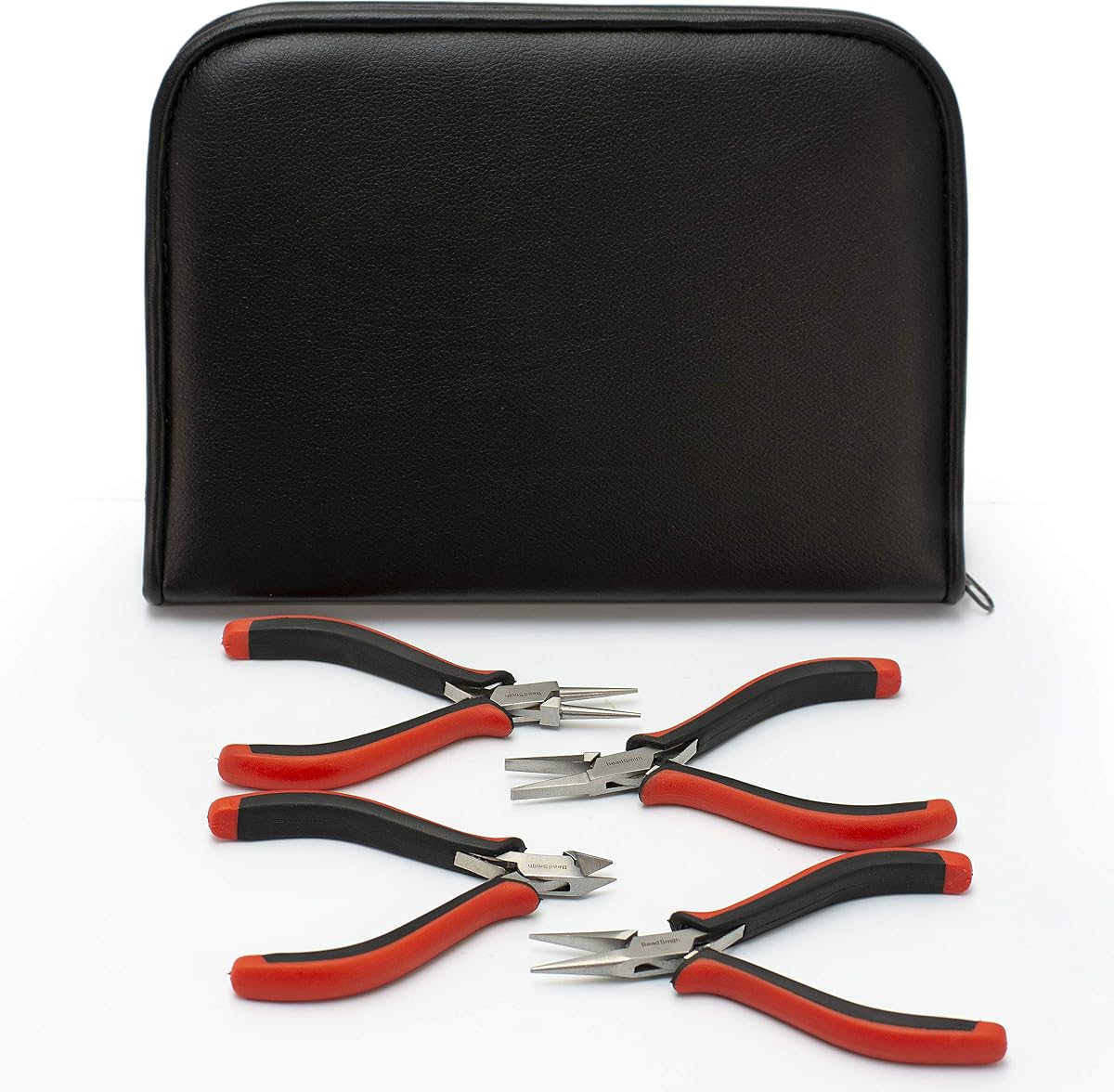
The Beadsmith is what the starter sets are a rehearsal for. Four 5-inch pliers — round nose, chain nose, flat nose, and a semi-flush side cutter — with extra-fine tips for close work, polished steel heads, box-joint construction (the joint style that keeps jaws aligned instead of wobbling loose), and double-leaf springs that reopen the jaws and reduce hand fatigue over a long making session. The ergonomic grips and the black leatherette carrying case complete a set that is built to be kept, not replaced. If you already know you like making jewelry — or you are buying once for a seller who will make stock every week — this is the sensible money: the flat nose plier most sets skip is the second gripping hand that makes jump rings and spirals noticeably easier.
Honest pros:
- Box-joint construction and double-leaf springs — smoother, longer-lasting, easier on hands
- Extra-fine tips for small findings, tight loops, and close-up work
- Includes the flat nose plier most beginner sets leave out
- Leatherette case included — a real home for a set worth keeping
Honest cons:
- Costs more than the starter sets — the premium is build quality, not extra pieces
- Tools only — wire and findings are a separate purchase
- Extra-fine tips are for jewelry gauges; forcing thick or hard wire will spring them
Acejoz Jewelry Making Tools Kit, 6 pieces — the best with a crimper
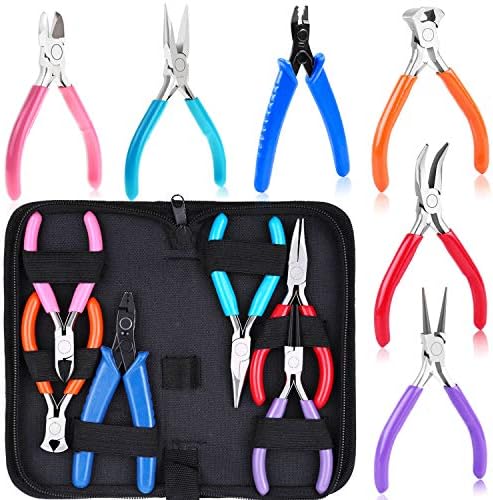
Most beginner sets quietly skip the tool that strung jewelry depends on: crimping pliers. The Acejoz six-piece set does not. Alongside needle (chain) nose, round nose, and bent nose pliers and a wire cutter, it adds dedicated crimping pliers — which first fold a crimp bead into a U around the beading wire, then round it closed — and end nippers, whose blades sit at a right angle for trimming protruding wire ends in tight spots. The bent nose plier earns its place too: its angled tip grips in hard-to-reach places and opens and closes jump rings without the handles blocking your view of the work. For a beginner whose first love is strung necklaces and bracelets rather than wire wrapping, this is the most complete tools-only set here.
Honest pros:
- Dedicated crimping pliers — the neatest, strongest finish for strung pieces
- Bent nose pliers for tight spots and a clearer view while you work
- End nippers trim wire ends where a side cutter cannot reach
- Six color-coded tools cover wire work and stringing in one set
Honest cons:
- Tools only — no findings, wire, or case
- Six tools is more than a first-weekend beginner needs; the crimper pays off from the first strung necklace, the rest as you grow
- Cutter is for thin wire up to 1 mm, like most jewelry cutters — keep it away from memory wire
WORKPRO Jewelry Pliers Set, 3 pack — the best branded starter
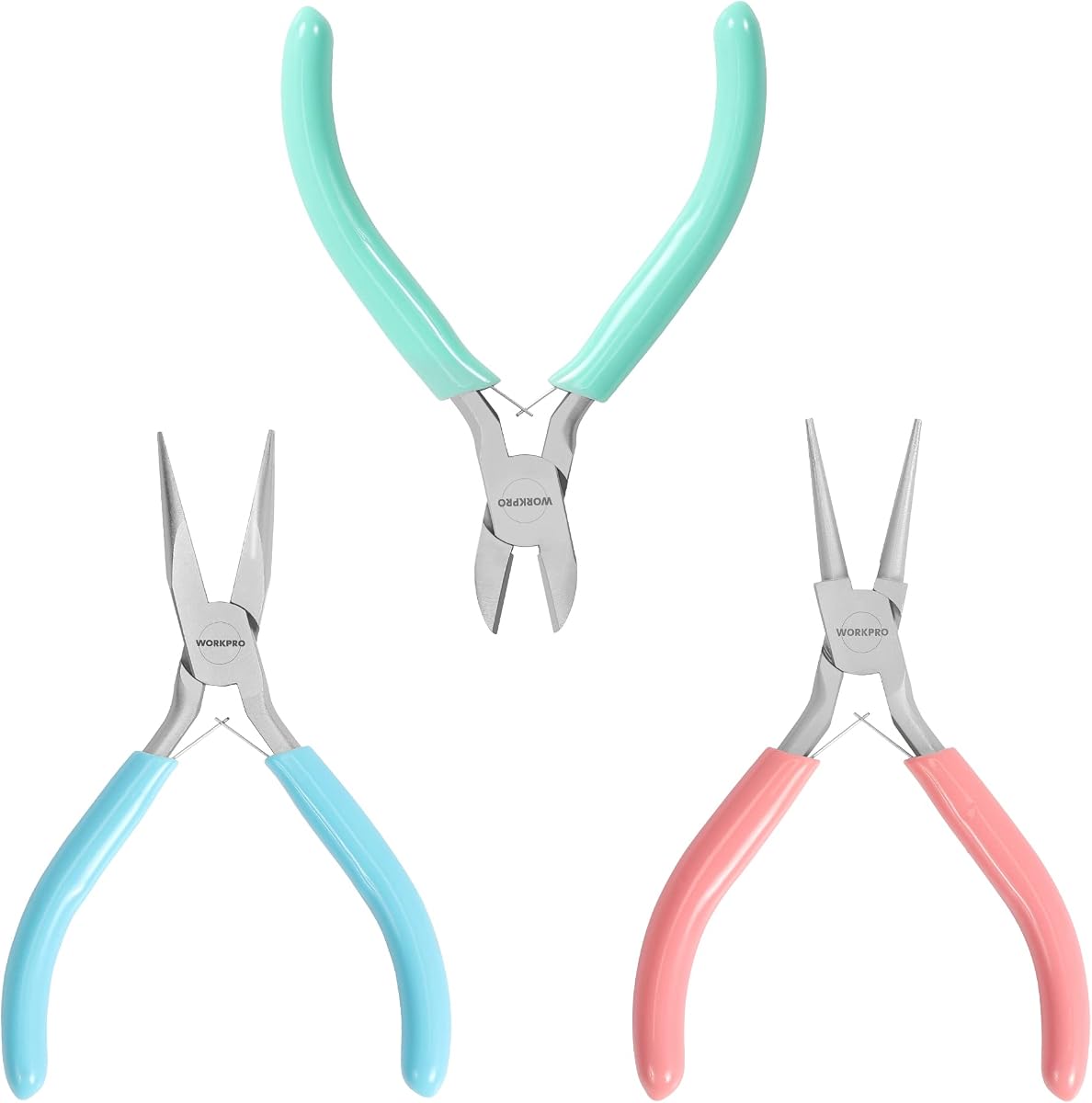
WORKPRO is a general tool brand rather than a craft label, and that shows in the construction: drop-forged carbon steel, a nickel-plated rust-resistant finish, polished surfaces, and ergonomic non-slip handles across a 5-inch chain nose plier, a 5-inch round nose plier, and a wire cutter, in light blue, pink, and green handles. The jobs are the same core three as the Shynek — gripping and bending, forming loops, and cutting — but the steel and finish are a step up, which is what you are paying for. Choose this over the budget set if the tools will live on a workbench and get used weekly; choose the Shynek if they will live in a drawer between occasional projects.
Honest pros:
- Drop-forged carbon steel with a nickel-plated finish — built to resist rust and daily use
- Ergonomic, non-slip handles and polished jaws
- A general tool brand behind the set, with a broad track record across its tool lines
- The same sensible core three: chain nose, round nose, cutter
Honest cons:
- Tools only, and no case — budget for a pouch if you travel with them
- No crimper, flat nose, or bent nose — a starter set, not a complete bench
- Costs more than no-name three-piece sets for build quality you feel over months, not minutes
The Beadsmith Fashion Color Pliers, set of 8 — the best expanded set
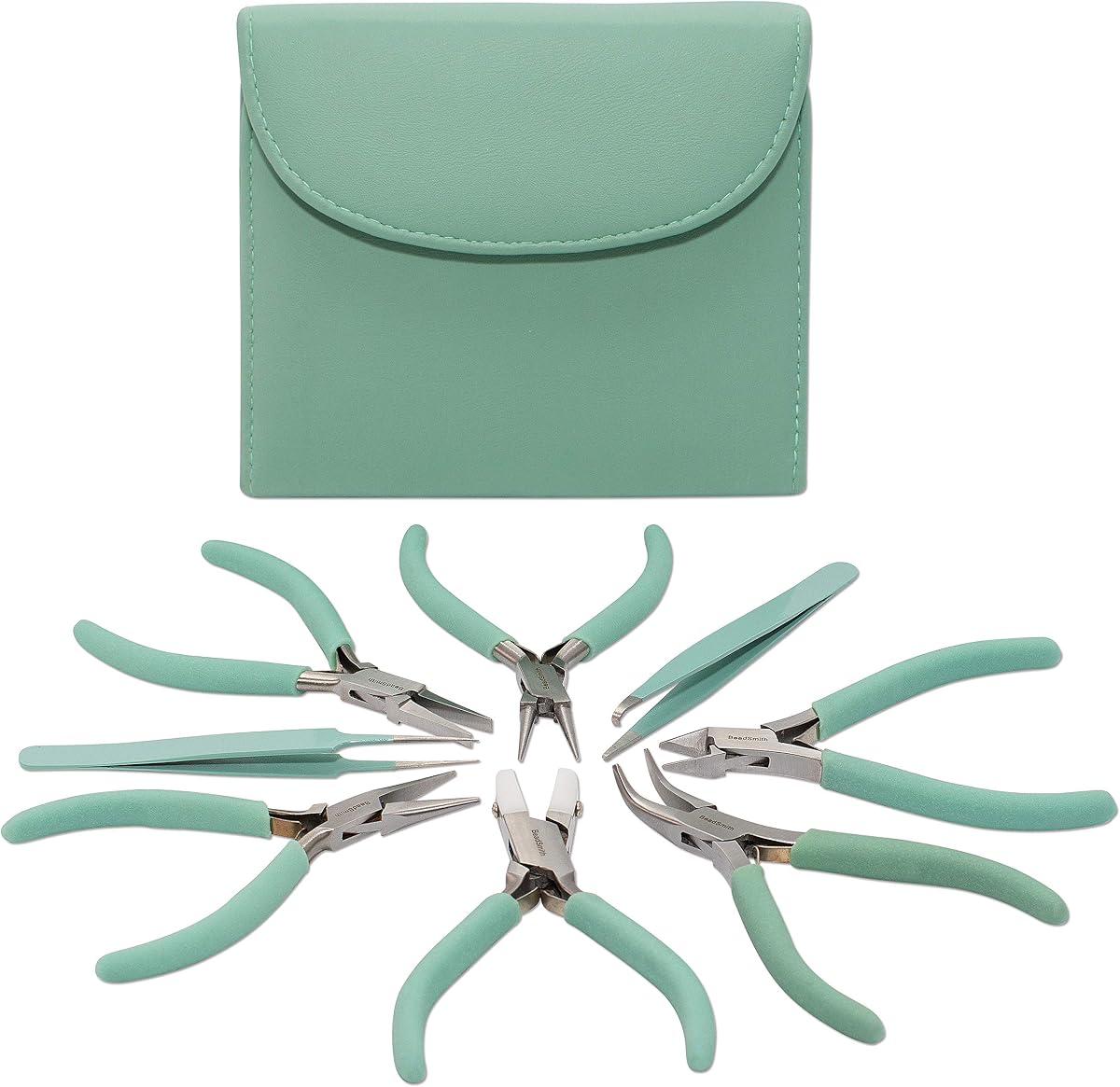
When the core three stop being enough, this is the set that answers the next five needs at once: chain nose, bent chain nose, flat nose, nylon jaw flat nose, and round nose pliers, side cutter pliers, knotting tweezers, and split-ring tweezers — eight tools in a matching clutch, in a choice of colors. Two picks deserve explaining. The nylon jaw plier straightens kinked wire and shapes soft metal without marking it, which no steel-jaw tool can promise. And having chain, bent chain, and flat nose pliers at once means the two-plier jump ring technique — one plier in each hand, twist, never pull apart — is always available. The pliers share the Beadsmith construction points that matter: comfortable handles, double-leaf springs, and box-joint construction.
Honest pros:
- Eight tools, including nylon jaw pliers that shape wire without scratching it
- Three gripping pliers make the two-handed jump ring technique easy
- Knotting and split-ring tweezers cover the fiddly jobs fingers hate
- Matching clutch included, and a color choice instead of generic black
Honest cons:
- The most to spend here — a second purchase for most beginners, not a first
- Still no dedicated crimper — strung-jewelry makers should pair it with one, or take the Acejoz
- Slimline tools suit jewelry gauges and smaller hands; heavy wire work is a different bench
Side-by-side
| PAXCOO Kit | Shynek 3pcs | Beadsmith Ergonomic 4pc | Acejoz 6pc | WORKPRO 3 pack | Beadsmith Fashion 8pc | |
|---|---|---|---|---|---|---|
| Typical price | Check latest price | Check latest price | Check latest price | Check latest price | Check latest price | Check latest price |
| Tools | 3 pliers + tweezers, caliper, awl & more | 3 pliers | 4 pliers | 6 pliers | 3 pliers | 6 pliers + 2 tweezers |
| Crimper | No (chain nose flattens crimps) | No | No | Yes | No | No |
| Wire & findings included | Yes — 3 rolls + 845 findings | No | No | No | No | No |
| Case | Zip pouch | No | Leatherette case | No | No | Matching clutch |
| Best for | Best overall — start from zero | Budget basics | Quality upgrade | Strung jewelry | Branded starter | Growing a bench |
How to choose
Start with the job list, not the piece count. Every finished piece of beginner jewelry uses the same handful of moves: grip and bend (chain nose), form a loop (round nose), cut cleanly (side or flush cutter), and — for strung pieces — secure a crimp (crimping pliers, or a chain nose used carefully). A set that covers your moves beats a set with a bigger number on the box. If you own no supplies at all, the PAXCOO's wire and findings matter more than any plier upgrade; if you already own beads and findings, spend the same money on better pliers instead.
Protect soft wire from your tools. Jewelry wire is soft, and it records every tooth mark and nick — which is why jewelry pliers have smooth jaws and household pliers stay in the garage. Two habits follow: never cut memory wire or hard steel with jewelry cutters (one cut can notch the blades permanently; use a dedicated memory-wire cutter), and reach for nylon jaw pliers when straightening or shaping wire you cannot afford to scar.
Learn the two-plier jump ring rule early. Open a jump ring by twisting one side forward with a second pair of pliers (or the jump ring opener in the PAXCOO kit), never by pulling the ends apart — pulled rings never close round again, twisted rings click shut like new. It is the single technique that most separates pieces that look handmade-in-a-good-way from pieces that look homemade, and it is why a second gripping plier — flat, bent, or a second chain nose — is the first upgrade most makers buy.
Then build the rest of the bench. Tools are only half a jewelry shop. Once pieces are finished they need photographing, presenting, and shipping: our packaging supplies guide covers the mailers, tissue, and inserts your finished jewelry travels in, our product photography lighting guide covers lighting small, shiny products so they sell, and our thank you cards guide covers the insert that turns a first buyer into a repeat one.
FAQ
What are the three essential jewelry making tools for beginners?
Chain nose pliers, round nose pliers, and a wire cutter. Chain nose grips, bends, opens jump rings, and flattens crimps; round nose forms the loops in head pins and eye pins that earrings and pendants hang from; the cutter trims wire and pins cleanly. Every pick on this page includes those three in some form.
Can I just use regular household pliers?
No — household pliers have serrated teeth that scar soft jewelry wire and findings on first use, and their jaws are too coarse for jump rings and crimp beads. Jewelry pliers have smooth, precisely tapered jaws sized for small components. The price difference is small; the finish difference is visible in every piece.
What is the difference between a flush cutter and a side cutter?
A side cutter leaves a small angled point on the cut end; a flush (or semi-flush) cutter leaves the end nearly flat, so there is less filing and fewer sharp ends to tuck or snag. For beading wire and head pins, flush is nicer. Both share the same limit: thin jewelry wire only, typically up to about 1 mm, and never memory wire.
Do I need crimping pliers?
Only if you string beads on beading wire — necklaces and bracelets finished with crimp beads or tubes. You can flatten a crimp with chain nose pliers, and beginners do, but a crimping plier folds it into a compact, rounded finish that holds better and looks professional. If stringing is your main style, the Acejoz set builds the crimper in from the start.
What wire should a beginner practice on?
Inexpensive craft wire in the 20–24 gauge range, in copper or a copper-based craft finish. It is soft enough to bend with beginner pliers, cheap enough to waste while your loops even out, and the same gauges cover most earring, pendant, and wire-wrapping projects. Save sterling silver and gold-filled wire until your practice loops close cleanly every time.