
Best Candle Wicks for Candle Making (2026)
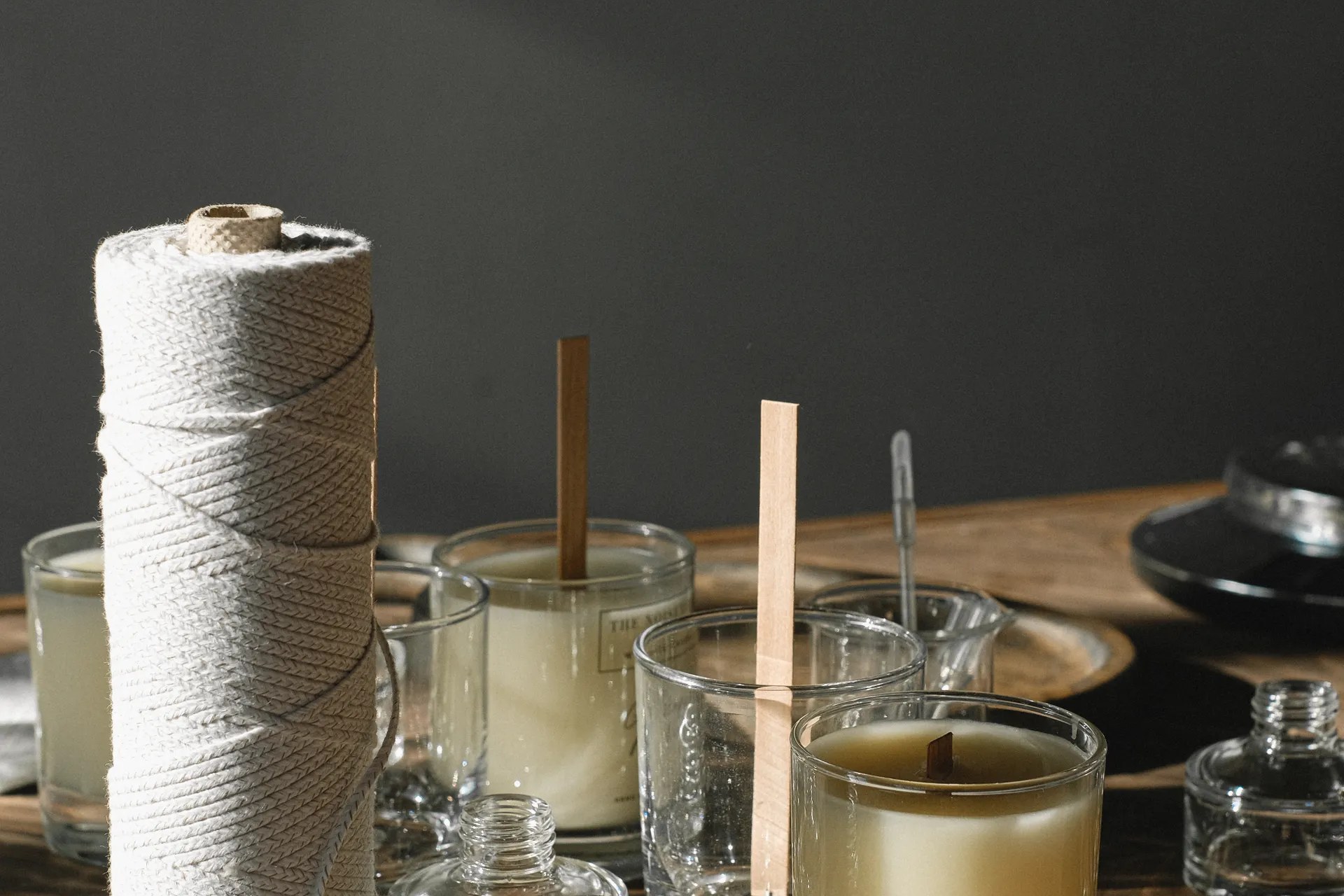
The wick is the engine of the candle. The wax, the fragrance, and the jar can all be perfect, and a wick that is one size too small still tunnels down the middle and wastes half the candle, while one size too large smokes, soots the glass, and burns through the candle in half the time. For a seller, the wick is also a returns problem: tunnelling and mushrooming are the two complaints buyers send photos of. Getting the wick right — and being able to buy the same wick again next month — is what turns a good pour into a repeatable product.
What matters is the match between the wick, your wax, and your container's inside diameter. Pre-waxed, pre-tabbed cotton wicks are the workhorse choice: they arrive ready to stick down and pour over. ECO-style flat braids run a little cooler and cleaner in 100% soy, thicker cotton-and-paper wicks stand up straighter in soft wax and suit wider jars, rigid-core wicks hold their posture in deep pours, and wooden wicks are a different product entirely — a premium, crackling upgrade buyers pay extra for. The six wicks below cover each of those jobs, from a five-cent everyday wick to the wood wick you build a gift line around.

The short answer
- Best overall: EricX Light 100 Piece Natural Candle Wick, 6 inch (~$6) — the best-selling candle wick on Amazon: pre-waxed, pre-tabbed, 100% natural cotton with a 12.5 mm base, at roughly six cents a wick. Check price on Amazon →
- Best for soy jar candles: GSXRB ECO Wicks, 6 inch, 100 pcs ($9.99) — a thick 3 mm flat-braid wick on a wide 19 mm base, made for soy and sized to stand firm in soft wax. Check price on Amazon →
- Best for tall and large jars: MILIVIXAY 8 Inch Soy Candle Wicks, 100 pcs — cotton threads woven with paper, coated in natural soy wax, with the extra length deep jars and large containers need. Check price on Amazon →
- Best rigid wick, made in the USA: Firefly Rigid Cotton Candle Wicks, 6 inch, 100 pack (~$15) — an extra-rigid pre-waxed cotton wick from a family-owned US maker, in four sizes from small to extra large. Check price on Amazon →
- Best budget: BEESWORKS 100 Piece Cotton Candle Wick, 6 inch ($4.99) — pre-waxed and tabbed cotton wicks at about five cents each, the cheapest honest way to test and pour. Check price on Amazon →
- Best wooden wick: MAQIHAN Wood Wicks, 100 wicks / 50 sets (~$9) — natural cherry wood wicks, 5.1 x 0.5 inch, with metal bases, for the crackling premium candle. Check price on Amazon →
EricX Light 100 Piece Natural Candle Wick, 6 inch — the best seller
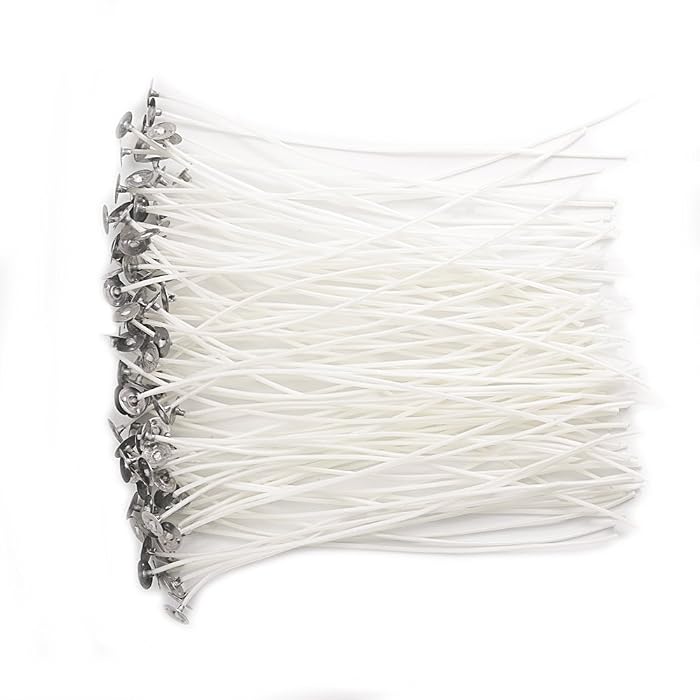
EricX Light's 6-inch wick is the default candle wick on Amazon — the best seller in Candle Making Wicks, bought thousands of times a month — and it earns that spot by being exactly what most makers need and nothing they don't. Each wick is 100% natural cotton, pre-waxed and pre-tabbed, low-smoke, with a 12.5 mm metal base and no lead, zinc, or other metals in the core. Six inches covers the standard run of jars and tins sellers pour — 8 oz jars, tins, and votives — and you trim the excess after the pour. At roughly $6 for 100, the wick adds about six cents to a candle's cost, which is why so many small lines are built on it. The honest limit is sizing: this is one general-purpose wick size, not a numbered series, so a very wide jar or a heavy fragrance load can outgrow it — that is what the ECO and 8-inch picks below are for.
Honest pros:
- Best-selling wick on Amazon — a huge base of maker experience behind it
- Pre-waxed and pre-tabbed — stick it down and pour, no priming or crimping
- 100% natural cotton core — no lead, zinc, or metal core to explain to buyers
- About six cents a wick — negligible in your cost per candle
Honest cons:
- One general-purpose size — wide jars over about 3 inches may tunnel and need a thicker wick or two wicks
- No wick stickers in the pack — budget a few dollars for stickers or a glue gun
- Heavy fragrance or dye loads can overwhelm any cotton wick — test at your real load, not a plain pour
GSXRB ECO Wicks, 6 inch — the soy jar specialist
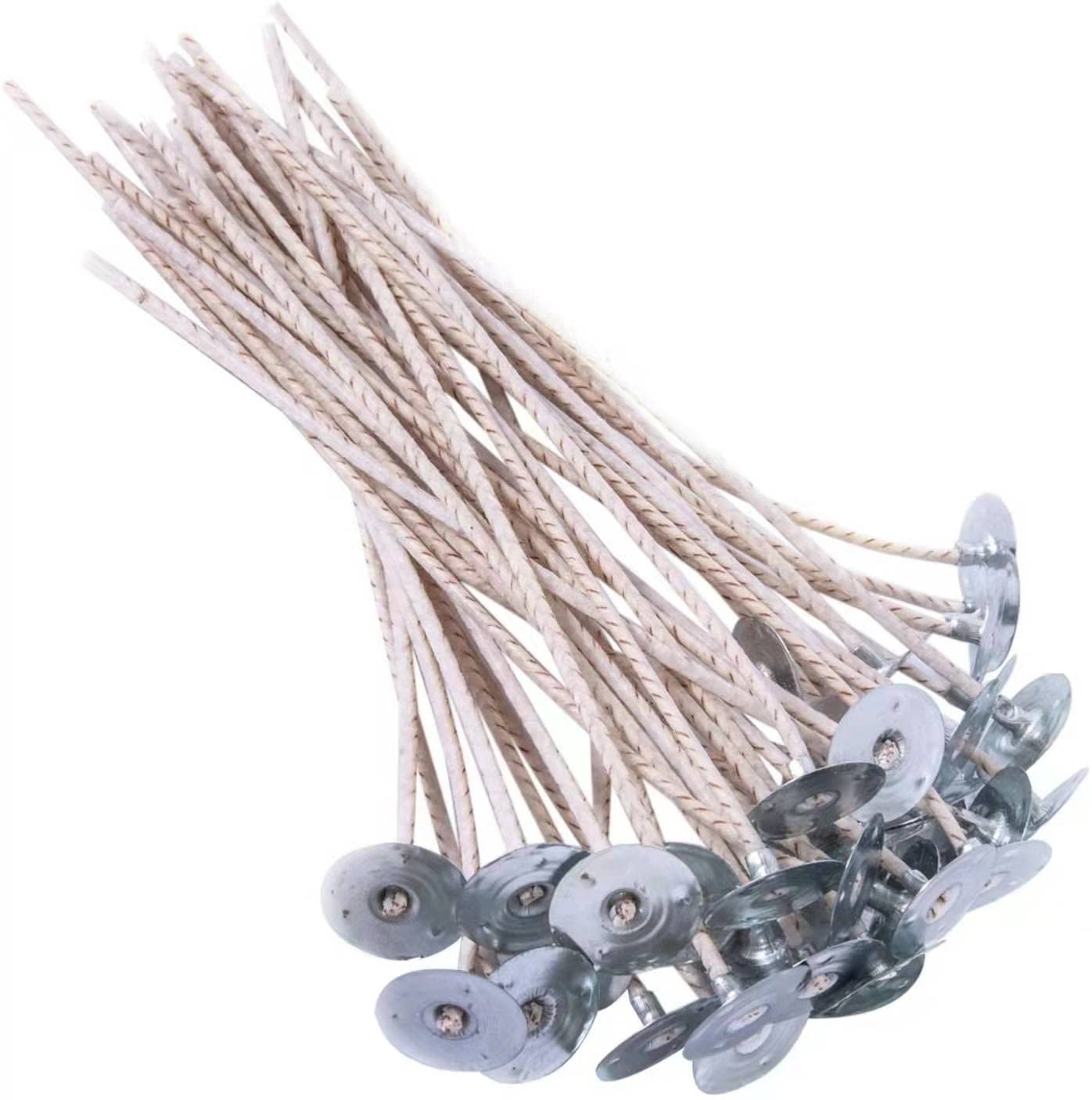
ECO wicks are the flat-braid family makers reach for in 100% soy: the braid curls slightly into the flame as it burns, which partly trims itself, and the family runs a little cooler and cleaner than a comparable CD wick, with less mushrooming. This GSXRB pack puts that idea in a sturdy form — a thick wick of about 3 mm on a wide 19 mm base, 6 inches long, pre-waxed and pre-tabbed, 100 to a pack at $9.99. The wide base is the quiet advantage: more contact area for your sticker or glue dot, and a wick that stays centred when hot soy hits it. The maker rates the wick across paraffin, soy, palm, and beeswax, but soy containers are its home ground. One caution that applies to every ECO-style pack sold this way: it is a single thickness, not a numbered ECO 2-through-14 series, so treat it as the wick for your standard jar and burn-test it there, rather than expecting one pack to cover every diameter you sell.
Honest pros:
- ECO-style flat braid — self-trimming curl, cooler and cleaner in 100% soy
- Thick 3 mm wick on a wide 19 mm base — stays centred in soft soy pours
- Pre-waxed and pre-tabbed, 100 to a pack at $9.99
- Works across soy, paraffin, palm, and beeswax
Honest cons:
- A single thickness, not a numbered series — one pack will not size every jar you own
- Thick wick runs large for narrow tins and tealights — keep a slimmer wick for small containers
- Wick stickers are a separate purchase
MILIVIXAY 8 Inch Soy Candle Wicks — the tall-jar pick
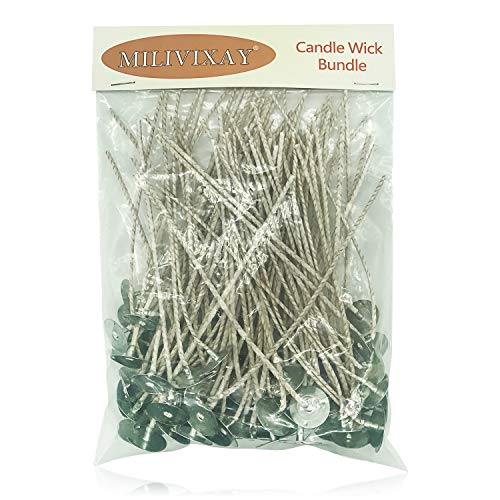
Standard 6-inch wicks run out of length exactly where profitable candles begin: deep apothecary jars, tall tumblers, and large multi-wick bowls. MILIVIXAY's wick answers with 8 inches of cotton threads woven with paper, coated in natural soy wax, pre-tabbed on a wide base, 100 to a pack. The paper in the braid is doing real work — it stiffens the wick so it stands straight in a deep, soft soy pour instead of leaning and drowning as the melt pool forms, and the extra two inches give you trimming room on tall vessels instead of a wick that barely clears the rim. These run on the larger side, which is the point: pair them with medium and large containers, roughly 3 inches across and wider, and keep your 6-inch wicks for the small jars. If your line is growing from 8 oz jars into bigger, higher-priced candles, this is the wick that grows with it.
Honest pros:
- 8-inch length — the trimming room tall and deep jars actually need
- Cotton woven with paper — stands straight in soft soy instead of leaning
- Coated in natural soy wax and pre-tabbed on a wide, stable base
- 100 to a pack — a production quantity, not a sample
Honest cons:
- Runs large — too much wick for narrow jars under about 2.5 inches, where the flame climbs too high
- Long wicks in short jars are pure trim waste — match the length to the vessel
- Keep fragrance and dye at sensible loads — heavy loads smoke and weaken any wick's burn
Firefly Rigid Cotton Candle Wicks, 6 inch — the rigid, US-made pick
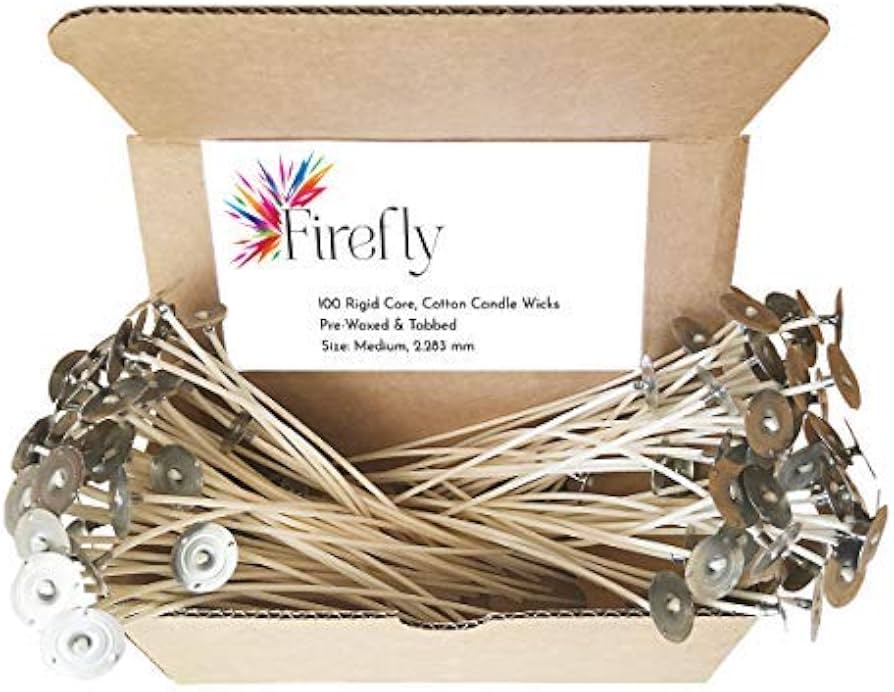
Firefly is the specialist on this list: a small, family-owned maker in Sarasota, Florida, selling one thing — rigid cotton wicks — in four honest sizes (small, medium, large, and extra large) so you size by your container instead of hoping one wick fits all. The wicks are natural cotton, pre-waxed and pre-tabbed, and built extra-rigid: they stand up straight when hot wax is poured over them, which is the moment standard wicks slump, drift off-centre, and set crooked. Firefly is explicit that the rigidity comes without a metal wire core, and equally explicit about the boundary — these are container wicks for glass, ceramic, and metal vessels, not pillar or taper wicks. At about $15 for 100, you pay roughly two to three times the budget packs' per-wick price; what you are buying is the sizing system and the consistency, which is the right trade once a crooked-wick batch costs more than the savings.
Honest pros:
- Four real sizes — pick small through extra large to match your container
- Extra-rigid body — stands straight through the pour, sets centred
- Made in the USA by a family-owned specialist maker
- Natural cotton, pre-waxed and tabbed, with no metal wire core
Honest cons:
- About $15 a pack — the priciest cotton wick here per piece
- Container candles only — not for pillars or tapers
- You must choose the right size — the system only pays off if you order deliberately
BEESWORKS 100 Piece Cotton Candle Wick, 6 inch — the budget pick
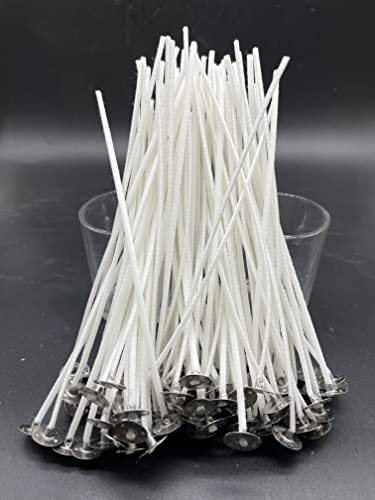
BEESWORKS sells the same basic tool as the EricX Light — a 6-inch, pre-waxed, pre-tabbed cotton wick, 100 to a pack — for $4.99, about five cents a wick. That price makes it the wick to learn on and to test with: wick testing means pouring the same candle three ways and burning all three, and a five-cent wick is what makes that discipline painless. It is also the sensible stock wick for low-priced lines — tins, votives, and wax-melt-adjacent products where the wick budget is real. The trade for the price is the same one-size generality as the EricX Light, from a smaller brand with a thinner base of reviews, so the working rule is simple: test this wick in your exact wax, jar, and fragrance before a production run, exactly as you should with any wick, and let the burn test — not the price — promote it to your main line.
Honest pros:
- $4.99 for 100 — about five cents a wick, the cheapest pick here
- Pre-waxed and tabbed — ready to use like wicks costing twice as much
- The affordable way to burn-test properly — three test candles cost pennies in wicks
- From the BEESWORKS candle-supply range, alongside its beeswax line
Honest cons:
- One general-purpose size — wide or heavily fragranced candles can outgrow it
- A smaller review base than the EricX Light — your own test burn matters more
- No stickers or centering tools in the pack
MAQIHAN Wood Wicks, 100 wicks / 50 sets — the crackling premium pick
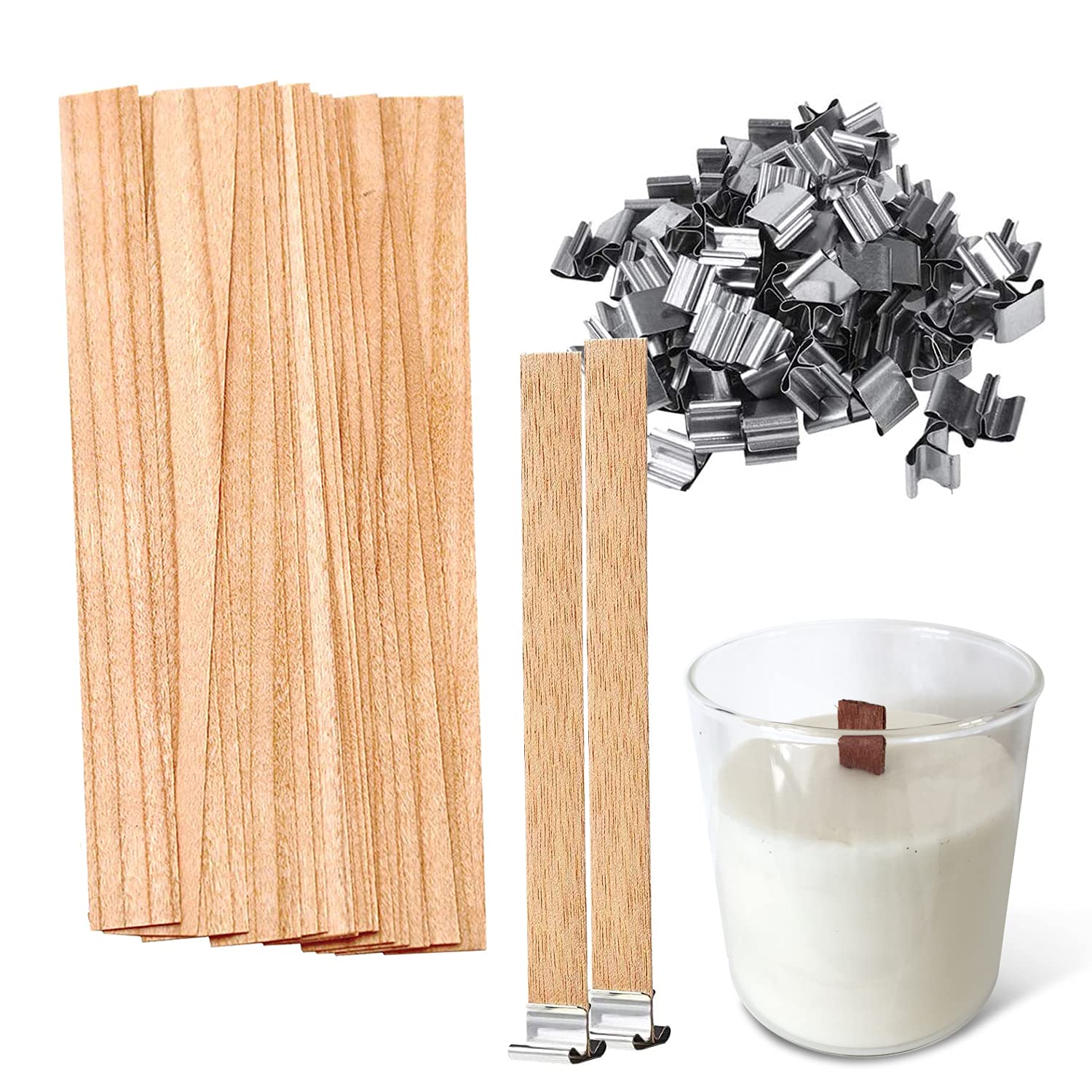
A wooden wick is not a better cotton wick — it is a different product that supports a different price. The flat cherry wood strip burns with a soft crackle, like a tiny fireplace, and buyers pay a premium for that sound and the clean, modern look of the wood strip in the jar. MAQIHAN's pack is the accessible way in: 100 natural cherry wood wicks and 50 metal bases — 50 sets, because the maker directs you to clip two strips into one base for soy and beeswax, which need the extra fuel feed — each strip 5.1 inches long by 0.5 inch wide, sized for candles of about 2.4 to 2.75 inches across, and usable in soy, coconut, paraffin, and beeswax. Wood wicks are fussier than cotton: they want a very short trim, about 1/8 inch, they can struggle or self-extinguish in a badly sized jar, and the crackle varies from batch to batch. That is the honest deal — test a small run, price the line as the premium product it is, and keep cotton as your workhorse.
Honest pros:
- The crackle is a real selling point — a sensory feature buyers pay more for
- Natural cherry wood with metal bases included — 50 complete sets
- Works across soy, coconut, paraffin, and beeswax candles
- A flat, modern look that photographs beautifully in listings
Honest cons:
- Fussier than cotton — sizing and a short 1/8 inch trim decide whether it stays lit
- Two strips per base in soy or beeswax — your real yield is 50 candles, not 100
- Crackle strength varies — never promise a loud crackle in a listing
- One width — wide vessels need multiple sets spaced across the jar

Side-by-side
| EricX Light 6" | GSXRB ECO 6" | MILIVIXAY 8" | Firefly Rigid 6" | BEESWORKS 6" | MAQIHAN Wood | |
|---|---|---|---|---|---|---|
| Typical price | ~$6 / 100 | $9.99 / 100 | Check latest price | ~$15 / 100 | $4.99 / 100 | ~$9 / 50 sets |
| Wick type | Cotton, pre-waxed | ECO-style flat braid | Cotton + paper braid | Rigid cotton | Cotton, pre-waxed | Cherry wood |
| Length | 6 inch | 6 inch | 8 inch | 6 inch | 6 inch | 5.1 inch |
| Base | 12.5 mm tab | 19 mm tab | Wide tab | Tabbed, 4 sizes | Tabbed | Metal clip base |
| Best for | Everyday jars & tins | 100% soy jars | Tall & large jars | Sized, centred pours | Testing & budget lines | Premium crackle candles |
How to choose
Size by inside diameter, never by jar name. Measure across the inside of the container at its widest point — the outside measurement lies by the thickness of the glass. As starting points in soy wax: a 2 inch jar starts around an ECO 2 or CD 4, a 2.75 inch jar around an ECO 6 or CD 8, a 3.1 inch jar around an ECO 8 or CD 10, and a 3.5–4 inch jar around an ECO 10–12 or CD 12–14. Past about 4 inches, two medium wicks spaced across the jar beat one huge wick every time — the melt pool stays even and the glass stays cooler.
Then adjust for your recipe. Soy needs a slightly larger wick than paraffin in the same jar because it burns cooler. A fragrance load of 8% or more, or added dye, thickens the fuel and usually pushes you one size up. Beeswax burns hot and slow and also sizes up. These are starting points, not answers — the answer only comes from a test burn in your exact wax, jar, fragrance, and load.
Read the test burn like a seller. A correct wick reaches a full melt pool — liquid wax edge to edge, about half an inch deep — within roughly 2 to 3 hours, with a calm flame around an inch high. Tunnelling with wax left on the walls means size up. A tall, flickering flame, soot on the glass, or a bulbous mushroom cap on the wick means size down. Trim cotton wicks to about 1/4 inch before every burn (wood wicks shorter, about 1/8 inch), and cure soy candles a week or two before judging scent throw. New to the full process? Our candle making kits guide covers starter boxes, our candle wax guide matches the wax to the candle, and our fragrance oils guide helps you pick the scent the wick has to carry.
Do the per-candle maths. At about five to six cents, a cotton wick is one of the cheapest lines in your cost sheet — even Firefly's rigid wick at about fifteen cents and a MAQIHAN wood set at about eighteen cents are small next to wax and fragrance. The expensive wick is the wrong wick: a tunnelled candle returned by a buyer costs you the whole product. Buy the wick your test burn proved, in the 100-pack, and keep one size up and one size down on the shelf for the next jar you add to the line.
FAQ
What size wick do I need for an 8 oz jar candle?
An 8 oz jar is typically 2.5 to 3 inches across inside. In soy wax, start testing around an ECO 10–12 or CD 12–14 equivalent — in the packs above, that is the GSXRB ECO's territory — and confirm with a test burn: full melt pool in 2 to 3 hours, no tunnelling, no soot. Your fragrance load can move you one size either way.
Why is my candle tunnelling?
The wick is too small for the container, the wax, or the fragrance load — it cannot generate a melt pool that reaches the walls. Size up one step and retest. Tunnelling on the first burn can also set a "memory ring" that follows the candle down, which is why the first test burn matters before you sell the batch.
Why does my wick mushroom and smoke?
A bulbous carbon cap — mushrooming — means the wick is too large or the fuel is too rich: excess fragrance or dye can overwhelm any wick. Size down, check your load percentages, and trim to about 1/4 inch before lighting. A mushroomed wick that is not trimmed smokes on the next burn even in a correctly sized candle.
Are wooden wicks better than cotton?
Different, not better. Wood wicks add the crackle and a premium look, and they are fussier: short trims, careful sizing, and two strips per candle in soy. Cotton wicks are cheaper, more forgiving, and come in far more sizes. Most sellers run cotton as the main line and wood as the premium line.
How long should a candle wick be?
Long enough to stand above the wax while it sets, with room to hold it centred — then trimmed. A 6 inch wick covers most jars and tins; tall or deep vessels need the 8 inch length. What matters for burning is the trimmed height above the wax: about 1/4 inch for cotton, about 1/8 inch for wood.